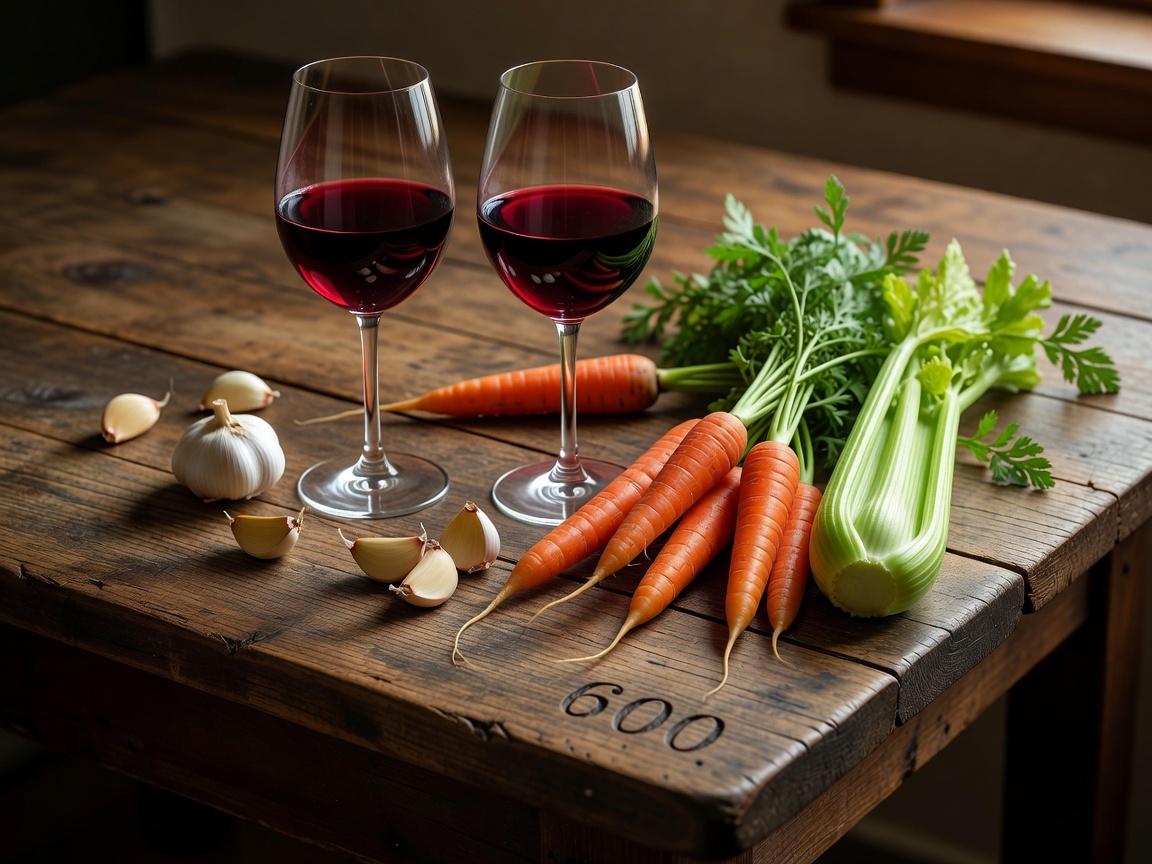
The Cardinal Rule: If You Wouldn’t Drink It, Don’t Cook With It
A common kitchen error is reaching for so-called "cooking wine"—a shelf-stable liquid laden with industrial preservatives, artificial colorants, and sodium. As wine simmers down in a braise, its water and alcohol evaporate rapidly, concentrating every non-volatile compound fourfold. Bitter tannins, off-flavors, and excessive salt concentrate right alongside the aromatics.
Authentic Coq au Vin originated in the Burgundy region of eastern France. Accordingly, regional culinary orthodoxy calls for red Burgundy, which is produced exclusively from 100% Pinot Noir grapes. However, regional French cookery also celebrates local variations: Coq au Vin de Brouilly using Gamay from Beaujolais, Coq au Vin Jurassien using white Savagnin, and even robust Rhône iterations made with Grenache and Syrah.
Evaluating Grape Varietals for Reduction
When shopping for your braising bottle, analyze grape varieties according to tannin density and natural acidity:
| Wine Varietal / Region | Tannin Profile | Acidity Level | Culinary Suitability |
|---|---|---|---|
| Pinot Noir (Burgundy / Oregon) | Low to Medium | Bright / High | Gold Standard: Silky, elegant, red-fruit clarity; never turns bitter during reduction. |
| Gamay (Beaujolais Crus e.g., Morgon) | Very Low | Crisp / Lively | Excellent: Fruity, vibrant purple color, highly compatible with young poultry. |
| Côtes du Rhône (Grenache blend) | Medium | Balanced | Hearty: Adds rustic peppery warmth and round fruitiness. |
| Cabernet Sauvignon (Heavily Oaked) | Extremely High | Moderate | Caution: Concentrated wood tannins can become harsh, astringent, and bitter. |
The Oak Caution
Avoid heavily oaked, vanilla-forward New World wines. Oak barrels impart lactones and excessive wood tannins. When boiled down into a demi-glace consistency, those pleasant vanilla and cedar notes transform into an acrid, mouth-drying astringency that fights against the delicate savory poultry.
To Marinate or Not: The Science of Overnight Soaking
Classical French recipes almost universally mandate a twelve to twenty-four hour cold marinade, in which raw chicken pieces, sliced carrots, celery, onions, garlic, and fresh herbs soak submerged in the full bottle of wine inside the refrigerator.
Modern food science provides nuance on what this soaking actually achieves:
- Surface Penetration: Wine marinade does not penetrate deeply into the center of chicken muscle fibers; large organic molecules diffuse slowly (typically less than a few millimeters per day).
- Enzymatic Tenderization: The mild natural acids (tartaric and malic) gently break down surface proteins, allowing seasoning and herbal aromatics to adhere firmly.
- Color Transformation: Soaking dyes the exterior meat tissue a dramatic, deep burgundy-purple, ensuring the signature rustic appearance expected of traditional French bistros.
Step-by-Step Marination Protocol
If choosing the authentic marinade approach, precision handling is essential:
- Combine ingredients cold: In a non-reactive vessel (glass, food-grade plastic, or enameled ceramic), combine your trimmed bone-in chicken cuts, coarsely chopped carrots, yellow onion chunks, peeled garlic cloves, and your bouquet garni.
- Submerge completely: Pour the entire 750ml bottle of red wine over the poultry, ensuring all surfaces are bathed. Cover tightly and refrigerate for 12 to 24 hours.
- The Vital Separation Step: Before cooking, remove the chicken from the liquid and drain it thoroughly in a colander over a bowl. Do not throw away the wine marinade! It is your braising stock.
- Meticulous Drying: Pat every chicken piece completely dry with paper towels. Wet poultry cannot brown; it will steam and become rubbery in the pan.