Stage 1: The Separation and Straining
When your Dutch oven emerges from its 160°C braising period, the chicken cuts will be tender, giving way willingly to a gentle fork press. At this stage, the braising liquid contains exhausted vegetables, broken bay leaves, and floating surface grease.
- Retrieve the Chicken: Carefully lift the chicken pieces out of the liquid using tongs, transferring them to a rimmed baking sheet. Tent them loosely with aluminum foil to retain warmth.
- Strain the Liquid: Set a fine-mesh conical sieve (chinois) over a wide saucepan. Pour the hot braising liquid through the strainer. Use the back of a ladle to press lightly against the cooked mirepoix vegetables to extract every drop of concentrated liquid, then discard the spent vegetables.
- Degrease the Surface: Allow the strained liquid to stand undisturbed for three minutes. Pure golden fat droplets will rise rapidly to the surface. Skim off the top layer using a shallow spoon or a fat separator pitcher.
Stage 2: Reduction & Viscosity Calibration
Place the strained, defatted liquid on the stovetop over high heat. Bring it to an active, rolling boil. Your goal is to reduce the volume by roughly one-third to one-half, concentrating the savory poultry gelatin and mellowing the remaining acidity.
Test the liquid for natural body: because you cooked with bone-in dark meat, substantial natural gelatin will already be present. However, classical Coq au Vin requires a luxurious, opaque viscosity that coats food without running watery across the plate—a culinary state known as nappe.
| Thickening Technique | Preparation | Sauce Texture Result | Flavor Profile |
|---|---|---|---|
| Beurre Manié (Classical) | Equal parts softened butter & all-purpose flour kneaded into a paste | Velvety, glossy, opaque sheen | Rich and buttery with zero flour lumpiness. |
| Cornstarch Slurry | Cornstarch dissolved in cold water | Gelatinous and glossy, but lacks richness | Can turn gummy if over-reduced. |
| Reduction Only | Boiling until liquid naturally thickens | Clear, dark, and intense | Can become excessively salty if stock had sodium. |
| Monter au Beurre | Whisking cold butter cubes off heat at the very end | High mirror gloss, light body | Lends incredible silkiness to the finish. |
Executing the Beurre Manié
In a small dish, thoroughly mash together two tablespoons of softened unsalted European-style butter with two tablespoons of sifted all-purpose flour until a uniform paste forms. Whisk small hazelnut-sized pieces of this paste into the boiling red wine sauce one at a time. The butter melts instantly, dispersing individual flour granules evenly through the liquid without forming clumps. Boil for two minutes to cook out raw flour starch.
Stage 3: The Reunion of Components
Once your sauce coats the back of a wooden spoon, lower heat to a bare simmer. Taste carefully: adjust seasoning with a pinch of coarse sea salt and freshly ground white or black pepper. If the wine feels slightly too sharp, whisk in one additional teaspoon of cold butter or a quarter-teaspoon of red currant jelly.
Slide your chicken pieces back into the velvety sauce. Add your reserved garnitures: the crisp lardons, the caramelized pearl onions, and the pan-roasted mushrooms. Simmer together gently for four to five minutes just to re-warm all elements through to their cores.
Serving Suggestions: Authentic French Accompaniments
A sauce this complex demands starch capable of soaking up every drop. Classical French cuisine recommends three primary pairings:
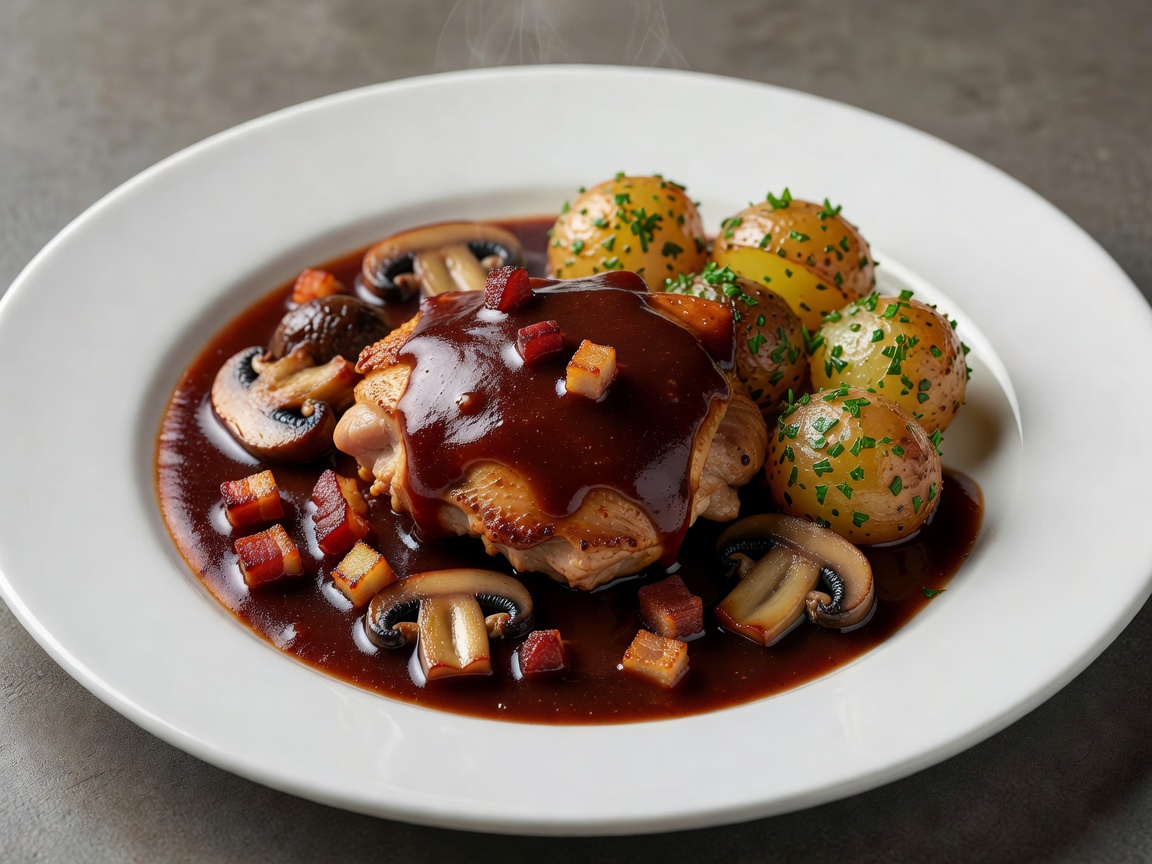
- Pommes Vapeur (Steamed Parsley Potatoes): Waxy Charlotte or fingerling potatoes steamed skinless, rolled in melted sweet butter, and coated in freshly minced flat-leaf parsley. Their clean starchy profile balances the heavy braise.
- Buttered Egg Noodles (Nouilles d'Alsace): Broad, golden ribbon noodles tossed lightly with butter, sea salt, and a grate of nutmeg.
- Crusty Sourdough Boule: Thick slices of rustic countryside levain bread with an open, airy crumb and blistering crust, perfect for mopping the plate.
Final Plating Presentation
Warm your serving bowls or platters with hot water and dry them thoroughly; hot food cools prematurely on cold ceramic. Place one chicken thigh and one drumstick in the center. Spoon generous portions of glazed pearl onions, mushrooms, and lardons around the meat.
Ladle the glossy, dark burgundy sauce directly over the chicken until it gleams under ambient dining light. Garnish with a sprig of fresh flat-leaf parsley. Serve immediately alongside a glass of the very same Pinot Noir or Cru Beaujolais used in the braise.