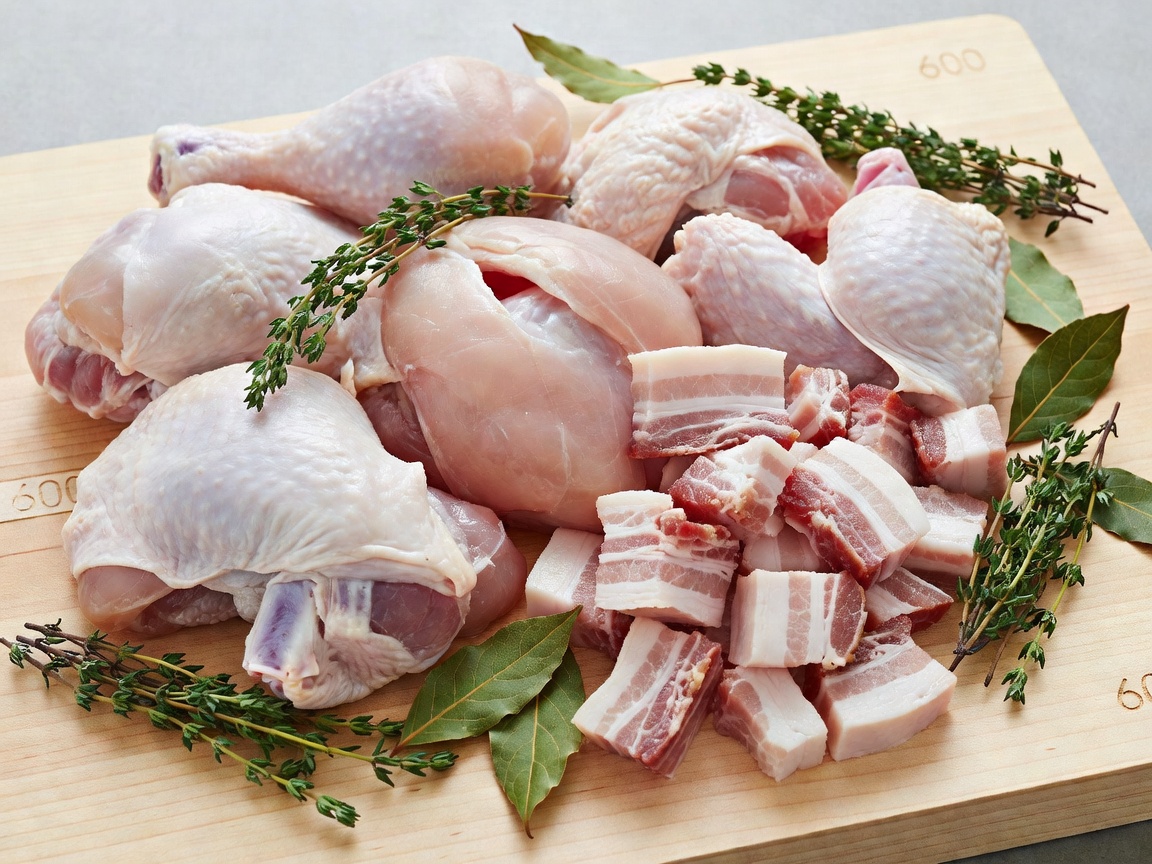
The Historical Origin of "Coq"
In traditional agrarian France, no livestock went to waste. An old rooster (coq) that had reached the end of its barnyard life possessed dense, fibrous, and stringy muscle tissue loaded with mature connective collagen. Cooking such meat quickly over direct heat resulted in an inedible, rubbery texture. However, when submerged in acidic red wine and subjected to prolonged, low-temperature simmering, the acid and prolonged gentle heat combined to dissolve tough intramuscular fascia into liquid gelatin.
Modern domestic kitchens rarely have access to true two-year-old game roosters unless sourced directly from specialty heritage poultry farms or game dealers. Standard supermarket chickens, by contrast, are broiler-fryers slaughtered at six to eight weeks old. Because their collagen has barely begun cross-linking, modern chickens require a calibrated braising strategy to prevent them from disintegrating into dry shreds.
The Bone-In Rule for Deep Braises
Skinless, boneless chicken breasts are entirely unsuitable for authentic Coq au Vin. White breast meat is composed of lean fast-twitch fibers that dry out and become chalky above 74°C (165°F). Bone-in, skin-on thighs, drumsticks, and split legs contain substantial marrow and connective tissue, supplying the rich gelatin necessary to give the reduced wine sauce body and sheen.
Comparative Cut Analysis for the Dutch Oven
When selecting your bird, evaluate how different cuts respond to ninety minutes of wine braising:
| Chicken Cut | Collagen Content | Recommended Prep | Performance in Red Wine |
|---|---|---|---|
| Chicken Thighs (Bone-in, skin-on) | High | Trim excess fat flaps; leave bone intact | Remains succulent and juicy; enriches the sauce deeply. |
| Drumsticks | High | Score skin lightly near lower joint | Holds shape exceptionally well; marrow fortifies stock. |
| Bone-in Split Breasts | Very Low | Cut in half crosswise; braise for only 30 minutes | Prone to overcooking. Best added during the final braise stage. |
| Heritage Capon / Stewing Hen | Extremely High | Requires full overnight marinade | Closest to historical profile; withstands 3 hours of low heat. |
The Pork Component: Lardons, Not Thin Bacon
The bedrock cooking fat of Coq au Vin is not olive oil or dairy butter; it is rendered pork fat derived from lardons. Traditional French lardons are cut from unsmoked, salt-cured pork belly (poitrine de porc demi-sel) or thick-cut slab bacon.
Thinly sliced commercial strip bacon contains high moisture and too much surface area, resulting in burnt crisps rather than tender, unctuous morsels. To prepare authentic lardons:
- Source a solid slab: Procure a slab of rindless, quality pork belly or thick double-smoked bacon slab.
- Batonnet slicing: Cut the slab into batons approximately 6mm (1/4 inch) wide by 25mm (1 inch) long.
- Optional blanching: If using heavily smoked bacon, simmer the lardons in boiling water for three minutes, then drain. This removes acrid smoke notes that could otherwise overpower delicate wine subtleties.
- Cold pan rendering: Start the lardons in a cold enameled pot over medium-low heat. Slow heat lets the pork fat liquefy gently, yielding crisp golden exteriors with chewy, savory centers.
Aromatic Herb Bouquet (Bouquet Garni)
Do not rely on dried ground spices. Coq au Vin demands an aromatic bundle wrapped securely in kitchen twine or cheesecloth:
- Fresh Thyme: Four to five sprigs of woodsy thyme provide the herbal backbone.
- Dried Bay Leaves: Two Turkish bay leaves deliver floral, earthy depth.
- Flat-Leaf Italian Parsley: Parsley stems contain more volatile oils and aromatic intensity than the leafy tops.
- Whole Black Peppercorns: Lightly cracked in a mortar to infuse heat without grit.
Tying these aromatics into a compact bouquet garni allows clean removal prior to sauce reduction, ensuring your velvety finished gravy remains completely smooth and uncluttered.